Does Stress Stunt Growth in Kids? What the Research Actually Says
Last updated: August 31, 2026
Everyday stress does not stunt a child's growth. Chronic, unrelieved stress is a different story. A 2023 review in Hormone Research in Paediatrics found that the body's short-term stress response causes no lasting harm, but chronic activation of the stress system, and the persistently high cortisol that comes with it, can suppress the hormonal axes a child's body uses to grow. The practical takeaway for parents is more hopeful than the headline: the two biggest ways stress reaches a child's growth are through disrupted eating and disrupted sleep, and both of those are things you can actually do something about.
Here is what the research actually shows, what counts as growth-affecting stress versus normal childhood pressure, and where nutrition fits into the picture.
The short answer: normal stress no, chronic stress can
Stress is not one thing. A test on Friday, a big game, an argument with a friend: these trigger a short burst of stress hormones that resolves on its own. The 2023 review by Mousikou, Kyriakou and Skordis describes this time-limited stress response as "antigrowth, antireproductive, and catabolic with no lasting adverse consequences." In plain language, the body briefly pauses growth-related work to deal with the challenge, then goes right back to normal.
The same review draws a hard line at chronic stress. When the stress system stays switched on for months, the researchers report "consequential negative impacts on growth, thyroid function, reproduction-puberty, and metabolism." That is the version of stress that can show up on a growth chart. It is also far less common than the everyday kind, and it usually comes with signs a parent can see.
What counts as stress to a child's body?
Nationwide Children's Hospital sorts childhood stress into three categories, and only one of them is the kind researchers connect to growth problems.
| Type of stress | What it looks like | Examples | Growth concern? |
|---|---|---|---|
| Positive stress | Brief, manageable, often motivating. Short bumps in heart rate and hormone levels. | Meeting new people, learning a skill, a challenge with parent or teacher support | No. This is part of healthy development. |
| Tolerable stress | More serious, but short-term and buffered by supportive adults, so the body recovers. | A car accident, a hospital stay, a family loss with strong support around the child | Not typically, when support is present. |
| Toxic stress | Continual activation of the stress response without enough adult support. | Abuse, neglect, caregiver mental illness, ongoing exposure to violence | Yes. This is the category research links to physical harm, including effects on growth. |
That framing matters because most parents searching this question are worried about school pressure, sports pressure, or a stressful season at home. Those usually land in the first two rows. The research on stunted growth is overwhelmingly about the third row: severe, ongoing stress with no relief.
How does chronic stress affect growth, according to the research?
The mechanism described in the 2023 review runs through cortisol, the body's main stress hormone. Under chronic stress, cortisol stays elevated, and the review reports that high cortisol suppresses the growth hormone and IGF-1 axis, along with the thyroid and puberty-related axes a growing body depends on. The same review notes that a stressor can also affect growth indirectly, through the everyday factors that feed it: diet, sleep, behavior, and overall health.
Nationwide Children's Hospital describes the same picture from the clinical side. Under toxic stress, the hormone system that controls cortisol is over-activated, blood cortisol runs higher, and children become more vulnerable to infections, illness, and learning and behavior problems.
One important note on how we handle this topic: those hormone findings belong to the researchers, not to any supplement. No gummy influences cortisol or growth hormone, and you should be skeptical of any brand that hints otherwise. What nutrition can honestly do sits one step downstream, and we will get to it.
What are the signs stress might be reaching your child's body?
Chronic stress rarely announces itself. It shows up in patterns. The ones most relevant to growth are the ones that drain the inputs growth depends on:
- Appetite changes. Meals skipped, portions shrinking, a previously decent eater turning picky. Stress and appetite are tightly linked, and a child under pressure often simply eats less.
- Sleep disruption. Trouble falling asleep, waking at night, dragging in the morning. Sleep is when a large share of growth-related work happens, so a stressed child who stops sleeping well is hit twice.
- More frequent illness. Nationwide Children's notes that children under chronic stress are more vulnerable to infections. A kid who is always run down is a kid whose body is spending its resources on defense.
- Behavior and school changes. Withdrawal, irritability, slipping grades, loss of interest in things they loved.
None of these alone means your child's growth is at risk. A cluster of them, lasting months, is worth a conversation with your pediatrician.
Why nutrition is the part of the stress picture you can control
You cannot always remove a stressor from a child's life. You can control what happens at the table. This matters because the research points at an indirect path from stress to growth that runs straight through the plate: a stressed child who eats less, sleeps less, and gets sick more often is a child accumulating exactly the nutrition gaps that growth depends on.
Genetics sets the ceiling here, and it always will. Research suggests roughly 60 to 80 percent of final height comes down to genetics, with the rest influenced by nutrition, sleep, and overall health during the years growth plates are still open. A stressful season cannot change your child's genes. What it can do is chip away at the inputs, calcium, vitamin D3, zinc, magnesium, quietly, at the exact moment the growth window is open. Girls' growth plates typically close between 13 and 16, boys' between 15 and 19, and you do not get that window back.
So the honest priority order for a stressed kid is: address the stressor, protect sleep, protect meals. Supplements come fourth, as a backstop for the gaps that stress-driven picky eating leaves behind. If your child's appetite has shrunk, our guide to hidden nutrition gaps in kids covers where the shortfalls usually hide.
Sports pressure: the stress most parents actually ask about
If your child is the athlete of the family, the stress question usually arrives wearing a jersey. Hard training, competition nerves, early practices. Is that the growth-harming kind of stress?
Mostly no. Exercise itself is a normal, healthy stressor, the kind the body is built to recover from. The place where sports and growth genuinely collide is energy: a young athlete who trains hard while under-eating is running the same nutritional drain that emotional stress causes, just through a different door. We covered that research in detail in our honest look at exercise and height. The question is rarely whether your child is doing too much sport. It is whether they are eating enough to cover the sport they are already doing, and whether the pressure around the sport is stealing their sleep.
Sleep is where stress and growth meet
Almost every path from stress to growth crosses through sleep. A wound-up child falls asleep later, sleeps worse, and wakes tired, and sleep is when the body does much of its growth-related repair work. Protecting a consistent bedtime during a stressful season is one of the highest-leverage things a parent can do, and it costs nothing. Predictable wind-down time, screens out of the bedroom, and a consistent wake time do more for a stressed kid than any product ever will. We wrote more about the sleep side in how sleep affects height growth. Caffeine is another common sleep thief in this age group, and we unpack the old myth around it in does coffee stunt your growth.
Can growth recover once the stress is resolved?
The research is genuinely encouraging here. The 2023 review concludes that targeted interventions to reduce stress during infancy, childhood, and adolescence "can have far-reaching benefits to long-term health as well as attaining adequate growth." The body wants to grow. Remove the chronic stressor, restore eating and sleep, and a child still inside the growth window has real room to make up ground.
The caveat is the window itself. Recovery needs open growth plates to work with, which is one more reason not to sit on a concern for a year. If you have noticed your child sliding on their growth curve during a prolonged stressful period, that is a pediatrician conversation now, not later. Watching for the signs of a normal growth spurt can help you tell ordinary variation from a real stall.
When should you talk to a pediatrician?
Bring it to your pediatrician if any of these are true:
- Your child has dropped noticeably on their growth curve over two or more checkups.
- A major stressor has lasted months and is visibly affecting eating, sleep, or mood.
- Appetite loss is persistent, not just a phase of a few weeks.
- Your child is getting sick noticeably more often than their peers.
A pediatrician can measure properly, look at the whole curve rather than a single data point, and rule out the medical causes of slow growth that have nothing to do with stress. If stress is the driver, they can also point you to real support, because the fix for toxic stress is safe relationships and professional help, not a product.
Where a multivitamin honestly fits (and where it does not)
Let us be plain about what a gummy cannot do. It cannot lower your child's stress. It cannot touch cortisol or growth hormone. It cannot substitute for sleep, safety, or a resolved problem at school.
What it can do is defend the nutrition line while you work on the rest. A stressed kid eating two-thirds of their usual meals is quietly shorting the calcium, D3, K2, zinc, and magnesium their skeleton is asking for during the growth years. Filling that gap is a multivitamin's whole job, and it is a job worth doing precisely when eating gets unreliable. That is the same reason we built the formula around picky eaters in the first place: stress-driven under-eating and everyday pickiness leave behind the same gaps.
What makes Tallori different
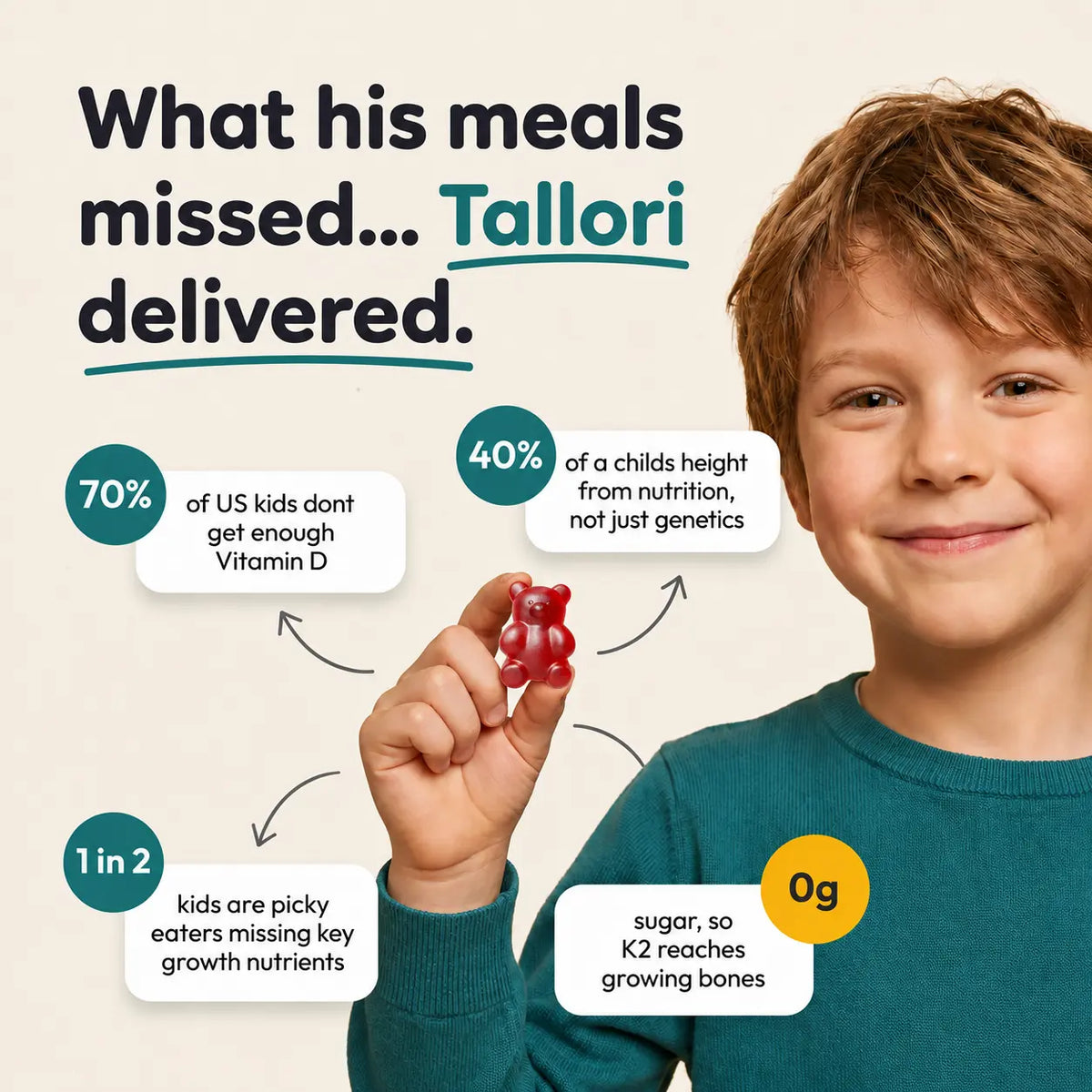
Tallori Growth Gummies is a zero sugar, pectin-based multivitamin designed for ages 5 to 18, the years the growth window is open. All 7 vitamin and mineral doses are printed on the panel where you can check them against NIH guidance: vitamin C 25mg, vitamin D3 25mcg, vitamin K2 as MK-7 100mcg, calcium 300mg, magnesium as glycinate 50mg, zinc as citrate 6mg, and omega-3 DHA 50mg from algae oil. The botanicals, including ashwagandha, sit in a 112.4mg Clean Growth Blend, the same structure most brands in this category use. Sweetened with monk fruit and xylitol, never glucose syrup, because sugar works against the very nutrients a growth formula is built on. For the full breakdown of the formula, see our science-backed parent guide to kids' growth supplements.
Everyday stress does not cost your child height. Chronic stress that steals their meals and their sleep is what you watch for, and meals and sleep are the two levers a parent actually holds.

Try Tallori Growth Gummies
Zero sugar. All 7 vitamin and mineral doses printed on the label. 60-day money-back guarantee. Ages 5 to 18.
Shop NowRelated Reading
Frequently Asked Questions
Does stress stunt growth in kids?
Everyday stress does not. Research published in Hormone Research in Paediatrics in 2023 found the short-term stress response causes no lasting harm, while chronic, unrelieved stress can negatively affect growth, thyroid function, and puberty. The growth-affecting kind is severe and ongoing, not normal school or sports pressure.
Can school or sports pressure affect my child's height?
Typical school and sports pressure falls into the positive or tolerable stress categories, which the body recovers from. The realistic risk with a busy, pressured kid is indirect: eating less and sleeping worse during a demanding season, which drains the inputs growth depends on.
What is toxic stress?
Nationwide Children's Hospital defines toxic stress as continual activation of the stress response system without sufficient adult support, from things like abuse, neglect, caregiver mental illness, or ongoing exposure to violence. It is the category of stress research links to physical harm in children, including effects on growth and immunity.
How does cortisol relate to growth?
Researchers report that under chronic stress, persistently high cortisol suppresses the hormonal axes involved in growth, thyroid function, and puberty. That finding belongs to the research on chronic stress. No supplement affects cortisol or growth hormone, and brands claiming otherwise should be avoided.
Can growth catch up after a stressful period?
Research is encouraging. The 2023 review concluded that reducing stress during childhood and adolescence can have far-reaching benefits for long-term health and for attaining adequate growth. Recovery needs open growth plates to work with, so acting during the growth window matters.
What are the signs stress is affecting my child physically?
Watch for a lasting cluster of appetite loss, sleep disruption, more frequent illness, and changes in behavior or school performance. Any of these alone can be a phase. Several together, lasting months, is worth a pediatrician visit.
Can a supplement protect my child's growth from stress?
No supplement reduces stress or affects stress hormones. What a multivitamin can honestly do is help fill the nutrition gaps that open up when a stressed child eats less, so the bone-building nutrients like calcium, D3, K2, zinc, and magnesium keep arriving during the growth years. The stressor itself still needs to be addressed.
Is Tallori designed for stressed or picky eaters?
Tallori is a zero sugar, pectin-based gummy multivitamin for ages 5 to 18, designed for picky eaters, which includes kids whose appetite has shrunk during a stressful season. All 7 vitamin and mineral doses are printed on the label, it is sweetened with monk fruit and xylitol, and it comes with a 60-day money-back guarantee.
When should I see a doctor about my child's growth?
See your pediatrician if your child has dropped noticeably on their growth curve across two or more checkups, if a major stressor has lasted months and is affecting eating or sleep, or if appetite loss and frequent illness persist. A doctor can rule out medical causes and connect you with real support for the stress itself.
This article is for informational purposes and is not medical advice. Talk to your child's pediatrician about any nutrition, stress, or growth concerns.