Best Vitamins for Picky Eaters (Ages 5–16): What Actually Works
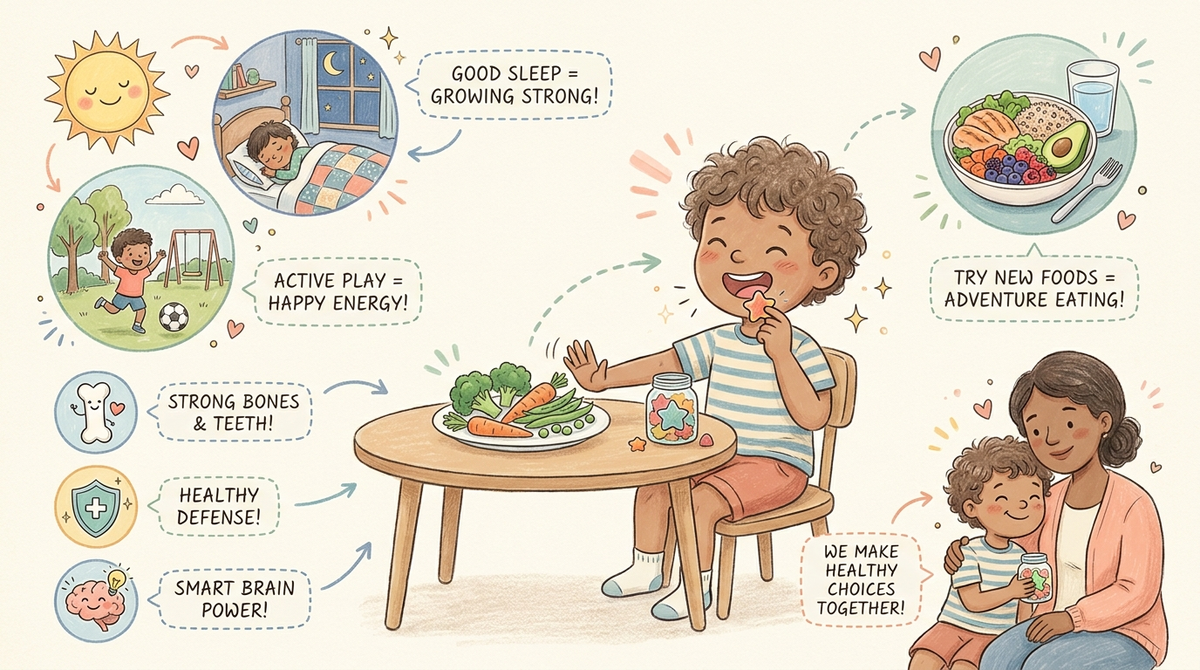
You have tried it cheesy. You have tried it hidden in pasta sauce. You have tried the bribe, the deal, and the airplane spoon. The broccoli still ends up under the napkin.
So you start to wonder what your picky eater is actually missing. And whether a vitamin can fill the gap that dinner cannot.
The short answer: the best vitamin for a picky eater covers the specific nutrients they skip when they refuse meat, fish, dairy, and greens. That means iron, zinc, vitamin D, calcium, and omega-3. Look for a complete formula, the right ingredient forms, and zero added sugar. A bone-only gummy loaded with sugar is the wrong tool. A complete, sugar-free formula your kid will actually take every day is the right one.
You are already a great parent. This just makes one thing easier.
What nutrients do picky eaters actually miss?
Picky eating is not really about taste. It is about which foods get skipped, and which nutrients ride along with those foods.
When a child refuses meat, fish, dairy, and vegetables, the same handful of nutrients keep coming up short. The Cleveland Clinic notes that supplements can help fill gaps for picky eaters and kids with low intake of nutrients like vitamin D and iron.
Here are the five that matter most during the growing years.
Iron. Iron carries oxygen in the blood and supports brain development. Kids who skip meat and dark leafy greens are the ones most likely to run low.
Zinc. Zinc supports immunity, appetite, and growth. It hides in foods picky eaters avoid: red meat, shellfish, beans. In a randomized trial of 140 school children, the group given zinc grew about 5.6cm over six months compared to 4.7cm in the placebo group, a measurable difference in kids who were short on it (Rerksuppaphol zinc supplementation trial, Pediatrics International).
Vitamin D. Vitamin D moves calcium into bone and supports immune function. Many US kids fall short, especially the ones who skip dairy and do not get much sun. The pediatric RDA is 600 IU per day (NIH Office of Dietary Supplements).
Calcium. Calcium is the raw material for bone. Kids ages 4 to 8 need 1,000mg a day, and ages 9 to 18 need 1,300mg (NIH ODS). A dairy-refusing kid almost never hits that from food alone.
Omega-3 DHA. DHA supports brain development and focus. It lives in fish, the food most picky eaters reject the hardest.
Miss the food, miss the nutrient. That is the whole picky-eater problem in one line.
Why "just keep offering" is not a nutrition plan
Every picky-eater parent has heard it. From the pediatrician. From a relative. From a parenting forum at 11pm. "Just keep offering. They will eat when they are hungry."
Sometimes that is true. The American Academy of Pediatrics describes food neophobia, the cautious-about-new-foods phase, as a normal part of development that many kids pass through.
But "they will grow out of it" is a behavior prediction. It is not a nutrition plan for the months in between. And the growing years do not pause while you wait.
That is the gap a daily vitamin is built to cover. Not to replace dinner. To support the nutrition dinner is not delivering yet.
Calcium alone is a 30% solution
Here is the opinion most vitamin labels will not tell you.
If your kid will not eat fish, vegetables, or dairy, calcium plus vitamin D alone is a partial fix. They are also short on omega-3 for focus, zinc for immunity, magnesium for sleep and recovery, and the whole-food nutrients in greens.
A growth gummy that only covers bones is a bone gummy with a marketing problem.
The picky eater needs the complete stack, because they are missing the complete stack. This is the single biggest reason a $10 bone-only multivitamin can leave real gaps open. It covers what is easy to formulate, not what your kid is actually missing.
What to look for in a vitamin for a picky eater
Skip the front of the package. The marketing lives there. Turn it over and read the label like this.
1. A complete formula, not just calcium and D3. Look for zinc, omega-3 DHA, and magnesium alongside the bone nutrients. The whole point is filling the gaps food leaves.
2. Vitamin K2 in the MK-7 form. K2 directs calcium to bone instead of soft tissue. MK-7 has roughly a three-day half-life. The cheaper K1 form clears in hours. A label that says "Vitamin K" without naming the form is usually hiding K1.
3. Omega-3 as direct DHA, ideally algae-sourced. Flaxseed omega gives you ALA, which the body has to convert into DHA, and that conversion is inefficient. Algae-sourced DHA skips the conversion step and is vegetarian, so no fish taste.
4. Doses you can actually see. If the label says "proprietary growth blend 500mg" without breaking out each ingredient, that is not formula privacy. That is hiding the math. A trustworthy brand prints the milligrams.
5. Zero added sugar. More on why this matters than teeth in a second.
6. A format your kid will take every day. The best formula on paper is useless if it ends up under the napkin too. Compliance is the whole game.
The sugar problem most parents miss
A lot of "growth" gummies carry 3 to 5 grams of added sugar per serving. For a picky-eater parent, that is the wrong trade twice over.
First, the obvious one. A daily sugary gummy is a daily sugar habit, and dentists notice. A sugar-free, pectin-based gummy is the dentist-friendly choice.
Second, the one nobody markets. A gummy that needs 3 to 5 grams of sugar to taste good is usually a formula built around flavor first and nutrition second. The sugar is doing the work the formula should be doing. Zero sugar forces the formula to earn its place on taste another way, and it tells you the brand optimized for the label, not the candy.
Zero sugar is not a "nice to have" feature on a growth gummy. It is a signal about what the brand prioritized.
Gummy vs chewable vs powder: which wins for a picky eater?
Format decides whether the nutrients ever get taken. For a genuinely picky kid, that is most of the decision.
Gummies. Highest compliance for most kids ages 5 and up. The texture and flavor win the daily battle. Look for pectin-based and sugar-free. Best for the kid who fights every pill.
Chewable tablets. Can pack more minerals and are an option for younger kids where a gummy is a choking concern. Taste is the variable. Some kids accept them, some do not.
Powders. Nutritionally flexible and easy to dose, but they have to be mixed into a drink or food, which a suspicious picky eater may detect and reject. The same instinct that catches hidden broccoli catches hidden powder.
There is no single right answer. The right one is the format your specific kid will actually take without a fight, every day, for months.
Where a different pick makes more sense
Tallori is built for picky eaters ages 5 to 18. It is not the answer for every situation, and pretending otherwise would be the exact overpromising this category is known for.
If your child is under 5, a gummy is a choking-hazard question for your pediatrician, and a chewable or liquid designed for toddlers is the safer category.
If your pediatrician has flagged a specific deficiency like iron-deficiency anemia, that is a targeted, doctor-dosed supplement, not a daily multivitamin. Bring the bloodwork to the appointment.
And if your kid genuinely prefers a melt tab or a powder over a gummy, the best formula is the one they will take. Compliance beats everything on the label.
For the daily nutrition gap in a picky 5 to 18 year old who will take a gummy, a complete, sugar-free, fully dosed formula is the practical pick. That is the lane Tallori was built for.
How Tallori compares for a picky eater
| What to look for | Typical sugary gummy | Tallori |
|---|---|---|
| Added sugar | 3 to 5g per serving | 0g, monk fruit sweetened |
| Complete stack | Often bone nutrients only | K2, D3, calcium, magnesium, zinc, omega-3 DHA, and more |
| K2 form | Often unspecified | MK-7 |
| Omega-3 source | Usually none | Algae-sourced DHA, vegetarian |
| Dose transparency | Often a proprietary blend | Every dose printed on the label |
| Tooth-friendly | Sugar is a dental concern | Pectin-based, dentist-friendly |
89% of kids ask for Tallori daily. Strawberry. Non-sticky. The compliance problem solved, without the sugar that defeats the point.
How long until a vitamin helps?
Anyone promising a transformation in 30 days is either guessing or selling sugar.
Nutrition works cumulatively. Parents tend to notice the early signs first. Better appetite, steadier energy, sharper focus at school, usually around weeks 6 to 8. The deeper benefits of filling a nutrient gap build over months of consistent daily use.
That is why a daily habit your kid will actually keep matters more than any single ingredient. Consistency is the lever. Not heroics.
The bottom line
The best vitamin for a picky eater is not the one with the loudest claim. It is the complete, fully dosed, sugar-free formula your kid will take every single day without a fight.
Cover the nutrients they skip. Read the label, not the package. Pick the format that wins the daily battle. Then let consistency do the slow, quiet work.
You are already doing enough. This just makes one part of it easier.
Try Tallori Growth Gummies
Zero sugar. 12 targeted ingredients. 60-day money-back guarantee. Ages 5 to 18.
Shop NowKeep reading
Frequently Asked Questions
What vitamins do picky eaters need most?
Should I give my picky eater a multivitamin?
Are gummy vitamins good for picky eaters?
What is the best sugar-free vitamin for kids who won't eat vegetables?
How long does it take for vitamins to help a picky eater?
Why does sugar in kids vitamins matter?
Is calcium and vitamin D enough for a growing picky eater?
Can vitamins make my picky eater taller?
These statements have not been evaluated by the Food and Drug Administration. This product is not intended to diagnose, treat, cure, or prevent any disease. Consult a healthcare professional before starting any supplement, especially for children under 5 or with a medical condition. Results vary by child.