Average Height for 13 Year Olds: 2026 Growth Guide

What if the number on the doctor’s wall isn't a grade, but just a single data point in a much larger story? According to the CDC, the average height for a 13 year old boy is 5 feet 1 inch. The average height for a 13 year old girl is 5 feet 2 inches.
We know how it feels to watch your teen stand next to their friends and wonder if they're falling behind. It's easy to worry about late growth spurts or hidden nutritional gaps during these fast-paced years. Emma and Dr. Lin have spent years studying how the right support helps every child reach their natural potential.
You’ll discover the latest 2026 growth standards and learn how to support your child’s healthy development through targeted nutrition. We will break down the 50th percentile charts and show you how to build a foundation for strong bones and steady growth. Our goal is to replace your worry with a clear, science-backed plan for your child's success.
Key Takeaways
- Learn the current CDC standards for the average height for a 13 year old, which is 61.4 inches for boys and 61.8 inches for girls.
- Understand how puberty triggers rapid bone development while growth plates remain open for further development.
- Identify how to maximize the 20 percent of height potential influenced by lifestyle factors like nutrition and 9.25 hours of nightly sleep.
- Discover why weight-bearing exercises and active habits support bone mineralization and long-term vitality.
- See how Tallori Growth Gummies help fill nutrition gaps to support bones and immunity during these critical growing years.
What is the average height for a 13 year old boy and girl?
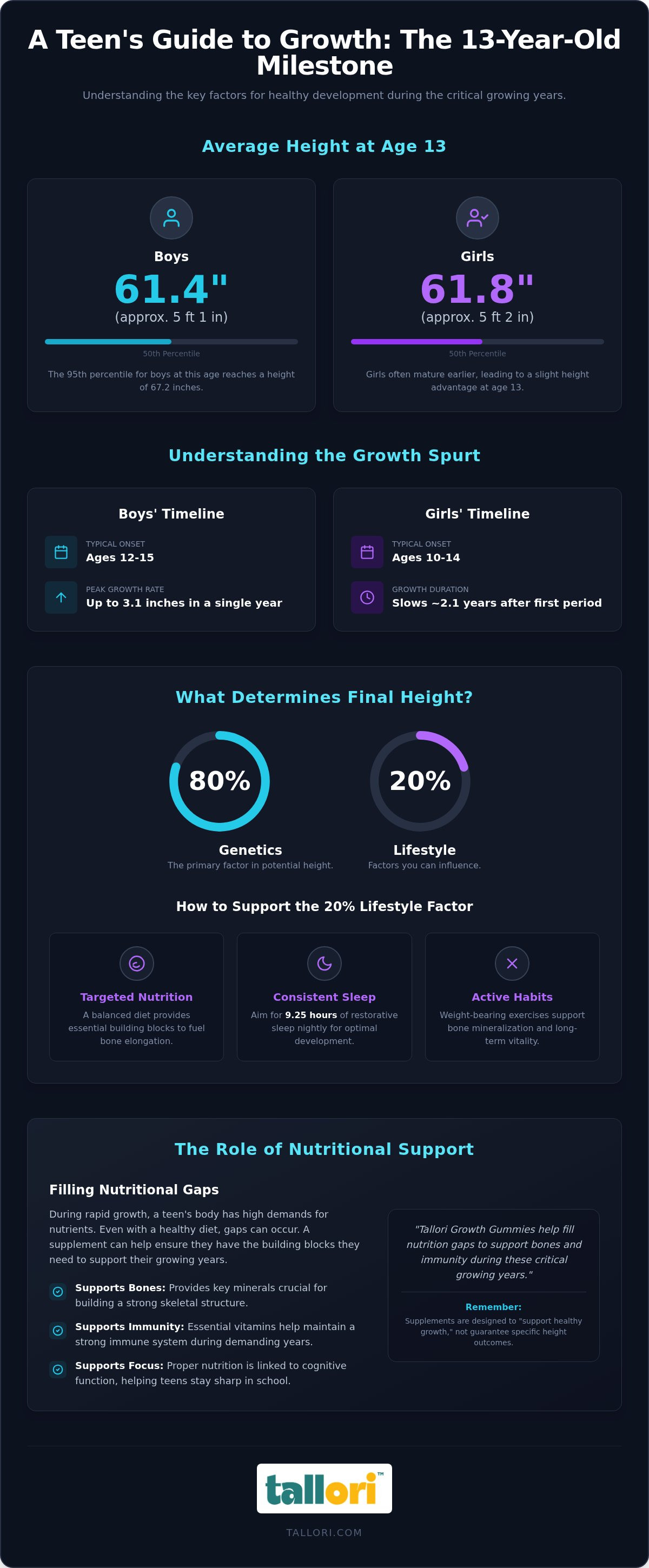
The average height for a 13 year old is 61.4 inches for boys and 61.8 inches for girls according to 2026 CDC data. These figures represent the 50th percentile for each gender. Most teens grow about 2.7 inches annually during this phase as their bodies prepare for adulthood.
Emma and Dr. Lin believe that tracking growth is about spotting long-term patterns. A single measurement in the doctor's office doesn't tell the whole story. Medical professionals look at how a child moves along their specific curve. This method helps them identify if a child is meeting their unique potential over several years.
During the thirteenth year, many teens experience a major leap in height. This 2.7-inch average growth spurt puts a high demand on the body's resources. It requires a steady supply of energy and specific nutrients to fuel bone elongation. Many different factors that impact height potential influence how smoothly this transition happens for your child.
What does the CDC say about 13 year old boys?
The 50th percentile for 13 year old boys is exactly 61.4 inches. This number means half of the boys in the United States are taller than this height and half are shorter based on CDC 2026 data. Boys at the 95th percentile are significantly taller and reach 67.2 inches.
Growth for boys often starts later but lasts longer than for girls. You might notice your son’s clothes getting shorter every few months. This rapid change requires extra minerals to support bones, immunity, and focus. Using Tallori Growth Gummies helps fill nutrition gaps during these intense stretching years.
What is the average height for 13 year old girls?
Girls usually reach their peak height earlier than their male peers. The average 13 year old girl stands 61.8 inches tall. This slight lead in height is common because girls often enter the puberty stage first. It's a natural part of the developmental timeline.
Timing is a major factor for girls during their growing years. Their growth usually begins to slow down about 2.1 years after their first period. This window is a critical time to focus on bone density and overall health. You can support healthy growth by ensuring your daughter gets a balanced diet and plenty of restorative rest.
How does the 13 year old growth spurt change your child?
Puberty triggers a rapid increase in bone length that changes how your child moves and feels. This process relies on growth plates that remain open throughout the thirteenth year. A typical 13 year old growth spurt requires significant metabolic energy and consistent nutrition to support healthy bone development.
While your teen is 13, these growth plates remain open and active. This means their body is still building new bone material every single day. It is a critical window for skeletal development that determines a large part of their final height. Providing the right building blocks now helps them reach their natural potential.
Many parents feel a sense of relief once they understand that growth isn't a race. The average height for a 13 year old provides a helpful baseline, but it isn't the final destination for every child. Each teenager follows a unique biological timeline based on their genetics and environment. Consistent sleep and proper nutrition provide the necessary fuel for this major metabolic leap.
When do boys usually start their growth spurt?
Most boys begin their primary growth phase between ages 12 and 15. This timing is often later than what girls experience in middle school. During this peak time, a boy might add 3.1 inches of height in a single year. You can find more specific data in our average height for 13 year old boy guide.
This rapid stretching often causes temporary discomfort in the legs or back. We call these "growing pains." They happen because the long bones are lengthening faster than the surrounding muscles and tendons can stretch. Providing enough calcium and vitamin D supports healthy growth and helps the body manage these intense months of change.
How does puberty timing affect height in girls?
Girls usually start their growth spurt earlier than their male classmates. Most experience this rapid change between ages 10 and 14. Their peak growth rate often occurs just before their first menstrual cycle begins. This is the moment when their body is working the hardest to build height.
After this peak, growth generally continues at a much slower pace for approximately 2.1 years. Nutrition is absolutely vital during this specific window to support bone density. A diet rich in essential minerals ensures their skeletal system stays strong as they reach their mature height. It helps them feel confident and energized as their body matures.
Emma and Dr. Lin suggest focusing on a routine that prioritizes 9.25 hours of quality sleep. This deep rest is when the body performs its most important growth and repair work. You can also use Tallori Growth Gummies to help fill nutrition gaps during these demanding growing years.
What are the main factors that impact height potential?
Genetics account for about 80 percent of a child's final height. This leaves a 20 percent gap that is entirely influenced by environmental factors like nutrition and sleep. Emma and Dr. Lin believe that while you cannot change DNA, you can certainly provide the right fuel to help your child reach their natural ceiling.
Many parents feel anxious when they look at the average height for a 13 year old and see their child is shorter. It is helpful to remember that growth is a long-term process. Chronic stress can sometimes impact the body's natural balance: so a calm and supportive home life is just as important as a good diet. We focus on empowering parents with the tools they need to support their child's unique journey.
Providing consistent support during these years makes a significant difference. Tallori Growth Gummies help fill nutrition gaps that often appear during busy school weeks. These gummies support bones, immunity, and focus without the use of hormones. Every purchase comes with a 30-day satisfaction guarantee to give you peace of mind as a provider.
How much do genetics influence height?
Your child's DNA is the primary predictor of their future stature. Most doctors use the mid-parental height formula to offer a rough estimate of where a teen might land. To find this number: you add the parents' heights together and divide by two. You then add 2.5 inches for a boy or subtract 2.5 inches for a girl to see their projected path.
Genetics set the biological ceiling for development. However: nutrition and lifestyle are what allow a child to actually reach that height. If a child lacks key minerals, they might not meet the potential their parents' DNA provided. Monitoring how they track against the average height for a 13 year old helps you identify if they need extra support.
What role does nutrition play in development?
Calcium and Vitamin D are essential for bone mineralization during the thirteenth year. These minerals work together to harden the new bone tissue created during a growth spurt. Protein provides the necessary building blocks for muscle growth and repair. Without these elements: the body may struggle to keep up with the rapid changes of puberty.
| Factor | Impact Level | Primary Focus |
|---|---|---|
| Genetics | 80 Percent | DNA and family history baseline |
| Nutrition | 10-15 Percent | Mineral intake and balanced meals |
| Sleep | 5-10 Percent | 9.25 hours of nightly recovery |
Busy teenagers often miss out on these critical nutrients because of sports and school. Using a supplement helps fill nutrition gaps and supports growing years effectively. This proactive care ensures your child has everything they need to feel strong and confident during their development.
How can parents support healthy growth through daily habits?
Supporting your child's development goes beyond just checking the average height for a 13 year old on a chart. It involves creating a daily environment where their body can thrive. Emma and Dr. Lin suggest focusing on three main pillars: sleep, movement, and consistent nutrition. These habits ensure that your teen has the energy they need for their next big leap.
Consistency is the secret to success during the teenage years. Small changes in a daily routine can lead to big improvements in how a child feels and grows. We know that parenting a teen is busy: so we focus on simple, actionable steps that fit into your family life. These habits help your child reach their biological potential while building a foundation for lifelong health.
How many hours of sleep does a 13 year old need?
Research shows that teenagers need exactly 9.25 hours of quality sleep to function at their best. The body performs most of its physical development during deep sleep stages. This is when the pituitary gland releases the signals necessary for bone elongation and tissue repair. You can learn more in our guide on sleep and height growth.
We recommend turning off all digital screens at least 45 minutes before bedtime. The blue light from phones can disrupt natural biological rhythms and delay the onset of rest. Setting a consistent schedule helps the body enter deep sleep faster and stay there longer. This routine ensures your teen gets the full restorative benefits of their 9.25-hour window every single night.
What exercises support healthy bone growth?
Physical activity acts as a direct signal to the skeletal system. Weight-bearing exercises like basketball or running are particularly effective during the thirteenth year. These activities create small, healthy stresses on the bones through impact and movement. This process stimulates the body to increase bone density and strength as the frame expands.
Yoga and daily stretching also play a vital role in development. These habits help maintain good spinal posture: which ensures your child stands at their full natural height. Strength training supports the muscles that hold the bones in proper alignment. A strong core helps prevent the slouching that often happens when the average height for a 13 year old changes rapidly.
Daily habits should also include a diet rich in leafy greens and lean proteins. These foods provide the vitamins and amino acids needed for muscle repair and bone mineralization. However: busy school schedules often make it hard to eat perfectly every day. You can buy Tallori Growth Gummies to help fill nutrition gaps and support growing years with ease.
Why is nutritional support critical for a 13 year old?
Teenagers often face intense schedules that make balanced eating difficult. Between sports and school: they might miss out on key minerals needed for bone mineralization. This is a critical time because their bodies are working hard to reach the average height for a 13 year old. Emma and Dr. Lin designed Tallori to help proactive parents provide steady support during these active years.
Many modern diets rely on processed snacks that lack the density needed for a growth spurt. When a child is tracking toward the average height for a 13 year old: their body requires a constant supply of building blocks. If these blocks are missing: the body may struggle to maintain energy levels or focus. Our gummies help fill nutrition gaps so your child can stay on track with their development.
How do Tallori Growth Gummies support your child?
Our gummies offer a convenient way to deliver essential nutrients to your busy teen. They are easy to take on the way to practice or during a morning routine. This formula supports bones, immunity, and focus during the demanding school years. You can check out Tallori Growth Gummies to give your child daily support they will actually enjoy.
Dr. Lin and Emma understand the pressure parents feel to get everything right. They created a non-hormonal solution that fits naturally into a healthy lifestyle. This approach supports healthy growth without using artificial fillers or unnecessary chemicals. It is a simple way to empower your child as they navigate the physical changes of puberty.
What vitamins are most important for 13 year olds?
Vitamin D3 is one of the most vital nutrients for a growing body. It helps the body absorb calcium effectively to build strong skeletal structures. Zinc is another powerhouse that supports cell division and immune system health. Our gummies use clean ingredients to ensure your peace of mind as a provider.
Zinc also plays a major role in how the body repairs itself after exercise. For a 13 year old athlete: this mineral is essential for maintaining vitality. Vitamin D3 acts like a key that unlocks the body's ability to use the calcium found in their diet. Without enough D3: the calcium your child eats might not reach their bones where it is needed most.
This supplement supports growing years by providing a reliable source of minerals. It is not a magic solution: but it is a science-backed partner in your child's care. We focus on purity and safety because we know how much you value your child's long-term health. Every bottle comes with a 30-day satisfaction guarantee to ensure you feel confident in your choice.
Empower Your Child's Healthy Development
Understanding the average height for a 13 year old helps you spot long-term patterns in your child's development. You now know that genetics provide the biological blueprint: but daily habits like 9.25 hours of sleep build the actual foundation. Emma and Dr. Lin want you to feel confident as your child navigates these fast-paced physical changes.
Our team of pediatric experts developed a clean solution to help you manage this transition with ease. Tallori Growth Gummies are free from synthetic fillers and provide essential minerals to support bones and immunity. We offer a 30-day satisfaction guarantee so you can provide this support with total peace of mind.
Support your child's growth potential with Tallori Growth Gummies. Your teen has an exciting journey ahead of them: and we are honored to be your partner in their care. You're doing a great job providing the tools they need to thrive.
Frequently Asked Questions
Is 5 feet short for a 13 year old boy?
Standing 5 feet tall is a normal and healthy height for many 13 year old boys. The average height for a 13 year old boy is 61.4 inches: but the normal range is very wide. Most boys fall between 58.2 and 67.3 inches at this age. Your son's specific growth curve over time matters much more than a single measurement on the wall.
Can a 13 year old still grow after their first period?
Yes: most girls continue to grow for approximately 2.1 years after their first period. While the rate of growth usually slows down: the body is still developing bone density and reaching its final height. This window is a critical time to focus on nutrition and sleep to support their skeletal system. Emma and Dr. Lin recommend keeping a steady routine during these important years.
How much do boys grow at age 13 on average?
Boys grow about 2.7 inches in a single year during this phase of puberty. Some boys may experience a more intense spurt and add 3.1 inches in just twelve months. This rapid change requires extra energy and a diet rich in minerals to fuel the expansion. It is common for clothes to feel too small every few months as their frame expands and matures.
What vitamins support bone health in teenagers?
Vitamin D3 and Zinc are essential nutrients that support bones, immunity, and focus. Vitamin D3 helps the body absorb calcium effectively: which is the main building block for strong bones. Zinc supports cell division during rapid growth phases. Tallori Growth Gummies helps fill nutrition gaps by providing these specific vitamins in a clean and convenient form for busy families.
Does caffeine stunt a 13 year old's growth?
Caffeine does not directly stunt bone growth: but it can disrupt the 9.25 hours of sleep teenagers need. Growth happens during deep sleep stages when the body performs its most important repair work. If caffeine prevents your child from resting: it might interfere with their natural developmental timeline. We suggest limiting soda and energy drinks to protect their vital sleep cycle every night.
How many inches is a normal growth spurt per year?
A normal growth spurt usually involves adding 2.5 to 3.5 inches in a single year. This rate varies depending on whether your child is at the start or the peak of puberty. Tracking these changes helps you understand how your child is meeting their unique potential. Consistent nutrition and physical activity help the body manage these fast-paced skeletal changes and maintain overall vitality.
Is my 13 year old child a late bloomer?
Your child might be a late bloomer if they haven't started showing signs of puberty by age 13. Boys often start their main growth spurt later than girls: usually between ages 12.2 and 15.4. This delay is often just a normal biological variation that follows family patterns. Talk to your pediatrician if you have concerns about their specific developmental milestones or timing.
Should I worry if my child is below the 50th percentile?
Being below the 50th percentile is not a cause for worry on its own. The 50th percentile represents the average height for a 13 year old: but half of all healthy children will naturally fall below that line. Doctors look for a steady growth curve rather than a specific number. Focus on supporting healthy growth through balanced meals and plenty of restorative rest.