Vitamin C for Kids: How Much They Need and Where to Get It
Last updated: August 23, 2026
Vitamin C for kids is a water soluble nutrient children need every day for immune function, tissue repair, and healthy skin and blood vessels, and unlike vitamin D3 or K2, the body can't store extra of it for later. Most kids who eat a varied diet with some fruit and vegetables already get enough. The question worth asking isn't whether your child needs a vitamin C supplement in general, it's whether your child's actual diet covers the number NIH recommends for their age.
Here's what the research says about how much kids actually need, which foods cover it easily, what happens when intake falls short, and where a general multivitamin like Tallori fits into the picture.
How much vitamin C does a child need?
The National Institutes of Health Office of Dietary Supplements sets a Recommended Dietary Allowance that rises with age. These are the numbers a pediatrician would check against, not a marketing claim.
| Age group | Recommended Dietary Allowance | Tolerable Upper Intake Level |
|---|---|---|
| 1 to 3 years | 15mg/day | 400mg/day |
| 4 to 8 years | 25mg/day | 650mg/day |
| 9 to 13 years | 45mg/day | 1,200mg/day |
| 14 to 18 years (girls) | 65mg/day | 1,800mg/day |
| 14 to 18 years (boys) | 75mg/day | 1,800mg/day |
Kids who smoke, or who live in a household with regular secondhand smoke exposure, need more vitamin C than the standard RDA, since tobacco smoke increases the body's need for it.
What does vitamin C actually do for kids?
Vitamin C supports several jobs at once, and none of them are exotic. It's a cofactor for collagen synthesis, the protein that holds skin, blood vessels, bone, and cartilage together. It's an antioxidant that helps protect cells from damage. It supports normal immune function. And it improves the absorption of nonheme iron, the plant based iron found in beans, lentils, and fortified cereals, which matters for kids who eat little or no meat.
None of that is the same claim as "prevents colds." The honest read on vitamin C and the common cold, based on the research NIH cites, is that regular supplementation may modestly shorten the duration of a cold in some people, but it does not reliably prevent one from starting.
Best food sources of vitamin C for kids
Vitamin C is unusually easy to get from food, which is part of why true deficiency is rare in kids who eat any fruits or vegetables regularly.
- Citrus fruits: oranges, grapefruit, and 100% citrus juices
- Other fruits: strawberries, kiwifruit, cantaloupe, and papaya
- Vegetables: red and green bell peppers, broccoli, tomatoes, and Brussels sprouts
A single medium orange or half a red bell pepper covers most of a young child's daily requirement on its own. This is the part of the picture that matters most for the picky eater conversation below: vitamin C is one of the easier gaps to close through food, if the food gets eaten.
What happens when a child doesn't get enough vitamin C?
True vitamin C deficiency, the kind that causes scurvy, is rare in developed countries and usually shows up only in kids with severely restricted diets, certain absorption conditions, or extreme picky eating that excludes fruit and vegetables almost entirely. Early signs include fatigue, irritability, and poor wound healing. Left untreated, it can progress to swollen or bleeding gums, joint pain, and easy bruising.
Milder, more common shortfalls don't look like scurvy. They look like a kid who eats almost no fruits or vegetables and is running consistently below the RDA without any dramatic symptom at all. This is the more realistic scenario for most families reading this, not full deficiency, just a gap between what's recommended and what's actually landing on the plate.
Is it safe to give a child a vitamin C supplement?
Vitamin C is water soluble, meaning the body doesn't store large reserves of it. Excess is generally excreted in urine rather than accumulating to dangerous levels the way fat soluble vitamins like A or D can. That said, "water soluble" doesn't mean unlimited. Going meaningfully over the Tolerable Upper Intake Level in the table above can cause stomach upset, diarrhea, and nausea in kids, particularly at doses well above what a normal diet or a standard multivitamin would provide.
The practical takeaway: a reasonable daily dose that respects the NIH upper limits for your child's age is a low risk addition. A large single serving gummy marketed as "immune support" with several times the RDA in one dose is where the stomach upset risk goes up, especially stacked on top of a normal diet that already includes some vitamin C from food.
Does vitamin C help kids grow taller?
No, and we'll say that plainly rather than dance around it. Vitamin C is not a height nutrient in the way calcium, vitamin D3, and vitamin K2 are, the three nutrients with the clearest, most direct link to bone mineralization in the research. What vitamin C does contribute is collagen synthesis, and collagen is a structural component of bone and cartilage, so it plays a supporting role in tissue that's actively remodeling during the growth plate years. That's a supporting role, not a headline one. Genetics accounts for roughly 60 to 80 percent of a child's final height, with nutrition, sleep, and overall health influencing the rest. No single nutrient, vitamin C included, moves that ceiling.
Vitamin C and picky eaters
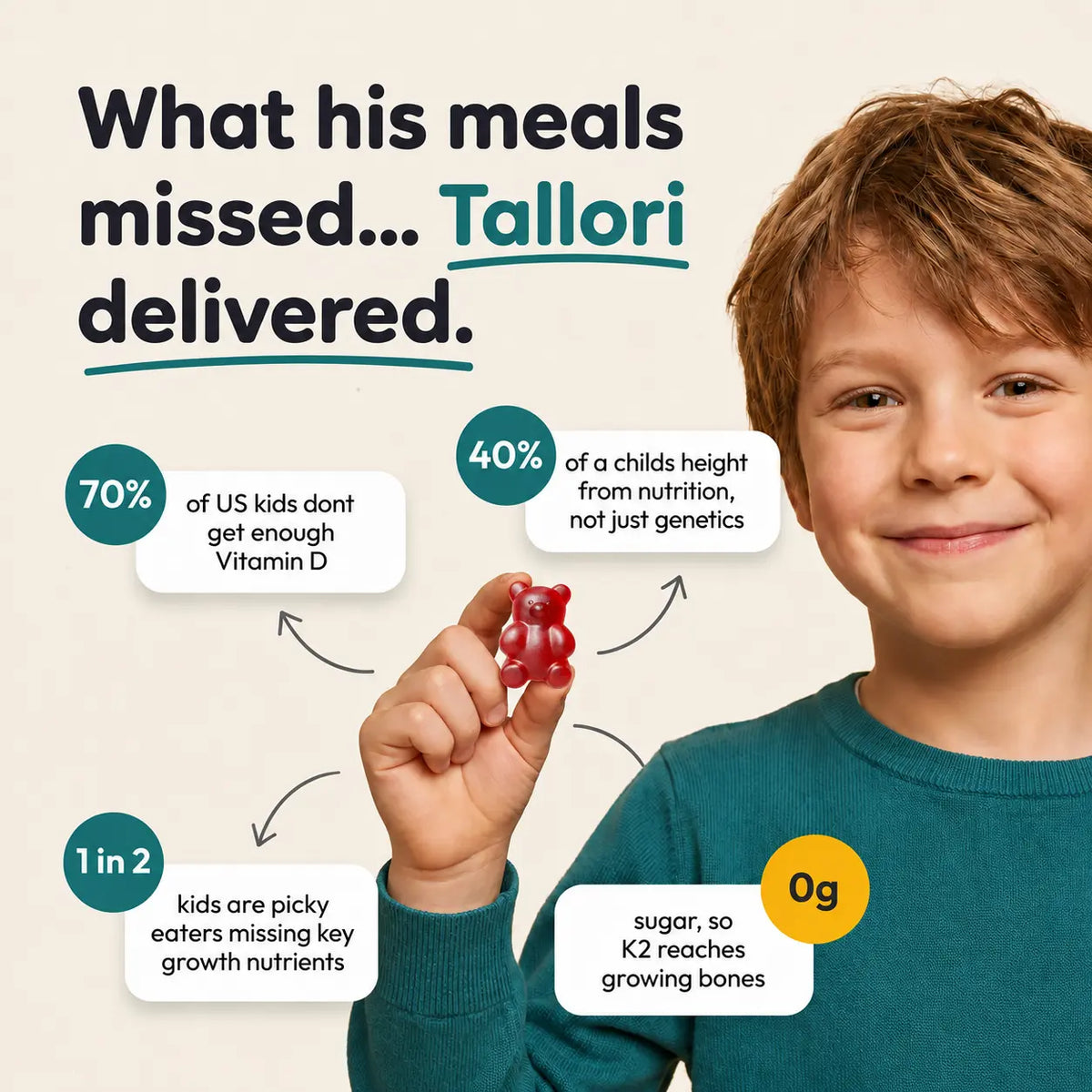
This is where vitamin C becomes a genuinely practical concern rather than a theoretical one. If your kid won't touch citrus, bell peppers, or broccoli, and mostly eats beige, low fiber foods, the gap isn't hypothetical. It compounds with the other gaps picky eating creates: missing calcium from skipped dairy, missing omega-3 from skipped fish, missing zinc and magnesium from skipped vegetables and whole grains. A kid who only eats a narrow rotation of foods rarely has just one nutrient shortfall. Picky eaters typically need more than one fix, which is the reasoning behind a broad multivitamin rather than a single nutrient supplement for kids in that situation.
Where vitamin C fits in a general multivitamin
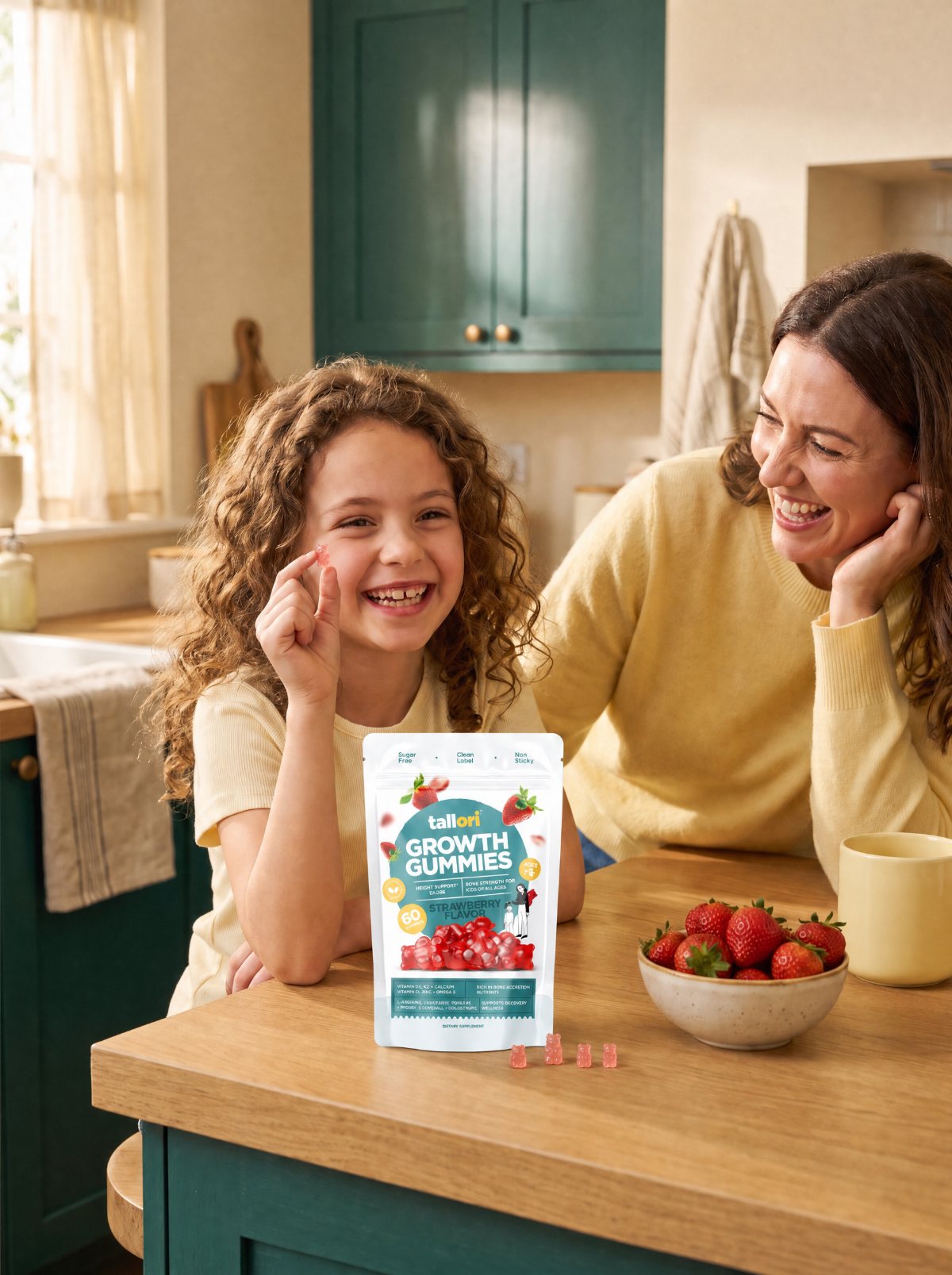
Vitamin C shows up in most kids' multivitamins for a straightforward reason: it's cheap to formulate, well tolerated, and covers a real (if usually mild) dietary gap. Tallori Growth Gummies include 25mg of vitamin C per serving as one of seven vitamin and mineral doses printed individually on the supplement facts panel, alongside vitamin D3, vitamin K2 in the MK-7 form, calcium, magnesium, zinc, and algae sourced omega-3 DHA. The formula also includes a 112.4mg Clean Growth Blend of botanical ingredients where individual doses aren't broken out, the same structure most brands in this category use for their non-RDA ingredients.
The reason this matters more than it sounds: a lot of "growth gummy" competitors print two or three doses and leave the rest, including sometimes calcium itself, buried in an undisclosed blend. Vitamin C is one of the easy ones to check. If a label doesn't print a milligram number next to vitamin C, or any of the other nutrients with a published pediatric RDA, that's worth noticing before you compare price per pouch.
Vitamin C vs the nutrients that actually build bone
It's worth being direct about hierarchy here rather than treating every ingredient on a label as equally important. Calcium is the raw material. Vitamin D3 helps the gut absorb it. Vitamin K2, specifically the MK-7 form, activates the protein that directs calcium into bone rather than soft tissue. Those three nutrients do the heaviest lifting in a growth window formula. Vitamin C, zinc, magnesium, and omega-3 DHA round out the formula and close real, common gaps, but they're not the headline ingredients a parent should be evaluating a brand on first. Check the K2 form and the calcium dose before you check anything else.
Sugar, absorption, and why the delivery method matters
One opinion Tallori holds firmly: zero sugar isn't a cosmetic feature, it's part of how the rest of a formula performs. Sugar triggers an insulin response that interferes with how efficiently the body directs calcium to bone via vitamin K2. Vitamin C itself isn't blocked by sugar the way K2's job is, but a gummy loaded with 3 grams of added sugar per serving to make the vitamin C palatable is undermining the other nutrients sitting next to it on the same label. Hidden nutrition gaps show up in more places than most parents expect, and a sugar heavy delivery method for an otherwise reasonable nutrient list is one of the more common ones.
How to know if your child's diet already covers it
Before adding any supplement, it's worth a rough mental tally. Does your child eat citrus fruit, berries, or juice a few times a week? Any bell pepper, broccoli, or tomato, even in small amounts? If the answer is yes on most days, they're likely close to or above the RDA already, and a supplement is filling a small gap rather than fixing a real deficiency. If the answer is closer to "rarely," that's a genuine, common gap worth addressing, either through more variety at meals or a general multivitamin that includes vitamin C alongside the nutrients that matter more for the growth window specifically.

Try Tallori Growth Gummies
Zero sugar. All 7 vitamin and mineral doses printed on the label, including 25mg of vitamin C. 60-day money-back guarantee. Ages 5 to 18.
Shop NowRelated Reading
Frequently Asked Questions
How much vitamin C does my child need per day?
Per NIH ODS, 15mg for ages 1 to 3, 25mg for ages 4 to 8, 45mg for ages 9 to 13, and 65mg (girls) or 75mg (boys) for ages 14 to 18.
Does vitamin C help kids grow taller?
Not directly. Vitamin C supports collagen synthesis, which plays a supporting role in bone and cartilage tissue, but calcium, vitamin D3, and vitamin K2 have the clearest link to bone mineralization. Genetics accounts for roughly 60 to 80 percent of final height.
Can too much vitamin C hurt my child?
Vitamin C is water soluble and excess is generally excreted rather than stored, but going meaningfully over the NIH Tolerable Upper Intake Level (400mg to 1,800mg depending on age) can cause stomach upset, diarrhea, and nausea.
Does vitamin C prevent colds?
Not reliably. Research suggests regular vitamin C intake may modestly shorten how long a cold lasts in some people, but it does not consistently prevent a cold from starting.
What foods are highest in vitamin C for kids?
Citrus fruits, strawberries, kiwifruit, cantaloupe, and red or green bell peppers, broccoli, and tomatoes. A single orange or half a bell pepper covers most of a young child's daily need.
What are the signs my child isn't getting enough vitamin C?
True deficiency (scurvy) is rare and shows up as fatigue, irritability, poor wound healing, and eventually swollen or bleeding gums. More commonly, kids simply run below the RDA without a dramatic symptom, usually tied to very low fruit and vegetable intake.
Does Tallori Growth Gummies include vitamin C?
Yes. Tallori includes 25mg of vitamin C per serving, one of seven vitamin and mineral doses printed individually on the label, alongside vitamin D3, K2 as MK-7, calcium, magnesium, zinc, and algae sourced omega-3 DHA.
Should picky eaters take a vitamin C supplement?
If your child rarely eats citrus, berries, or vegetables like bell pepper and broccoli, the gap is real rather than hypothetical, and it usually shows up alongside other missing nutrients like calcium, omega-3, and zinc. A broad multivitamin is often a more practical fix than a single nutrient supplement in that situation.
This article is for informational purposes and is not medical advice. Talk to your child's pediatrician about any nutrition or growth concerns.