Does Gymnastics Stunt Your Growth? A Parent's Guide
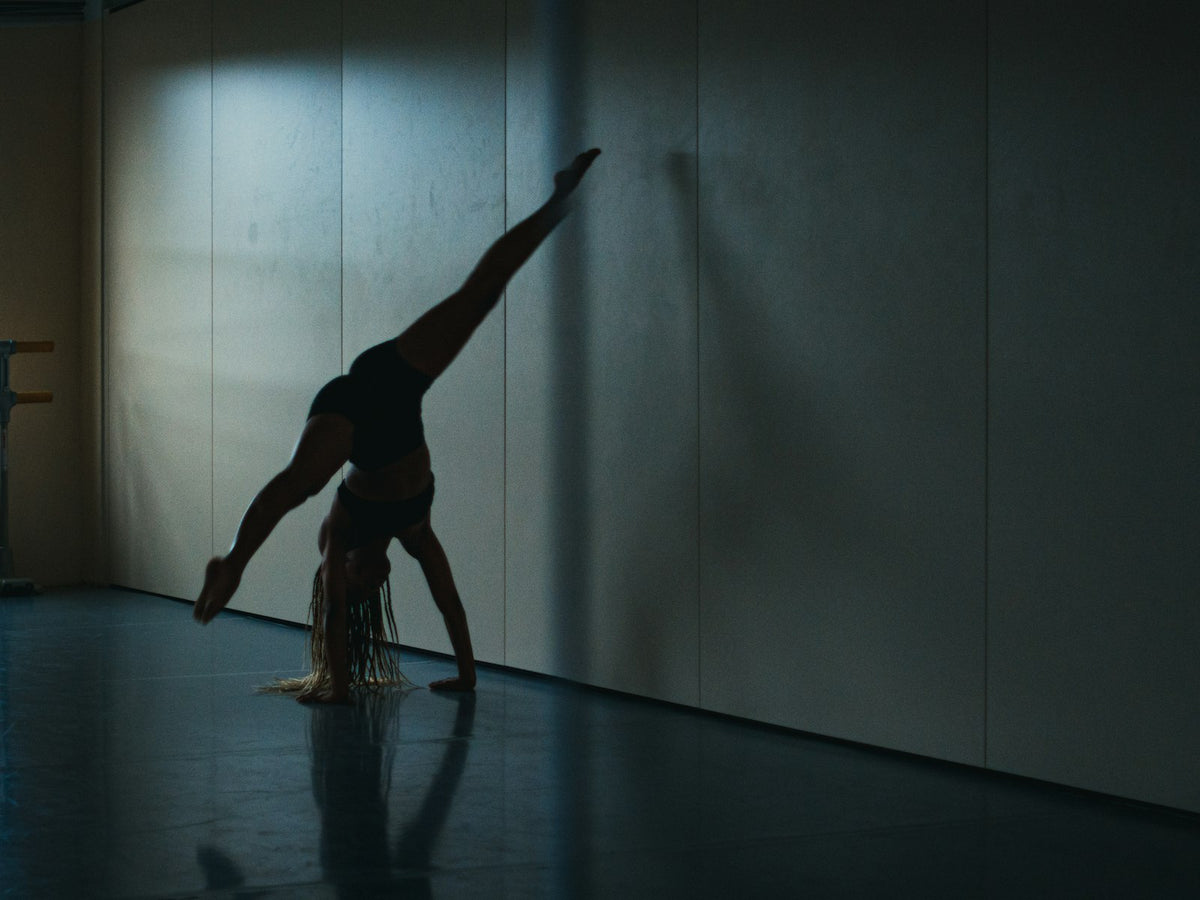
Research has not shown that gymnastics stunts growth on its own. An expert review found that hard gymnastics training does not lower adult height. Many gymnasts are short because of the kids who pick the sport and stay in it. The real risk is training that burns more energy than a child eats.
Watch a gymnastics meet and you will see a lot of small athletes. So it makes sense to worry. Is all that time in the gym keeping your child small? Here is what the research says, what to watch for, and how to fuel a young gymnast.
Does gymnastics stunt your growth?
For most kids, no. In 2013, a group of growth experts was asked by the world gymnastics federation to review the research. Their review found that the adult height of gymnasts, both girls and boys, is not cut short by intensive training (Malina and others, 2013).
The same review found that training does not seem to slow the growth of the legs or the upper body. It also does not seem to slow the growth spurt in the teen years.
That does not mean anything goes. Growth needs fuel. A child who trains hard and does not eat enough can fall behind. We cover the other things that can hold kids back in our guide to what stunts your growth.
Why are gymnasts so short?
Mostly because of who picks the sport and who stays in it. Kids who stay in gymnastics tend to be shorter for their age.
Research backs this up. A 2001 review found that girls who do gymnastics are often short even before they start training (Caine and others, 2001). The 2013 review said kids who stay in the sport are "a highly select sample" who tend to be shorter for their age (Malina and others, 2013).
Scientists say this makes sports hard to study. Kids are not placed into sports at random, so it is tricky to tell what a sport does to growth (Borer, 1995). In plain words: the studies could not show that gymnastics made them short.
Do gymnasts go through puberty later?
Many do, on average. The 2013 review found signs of later puberty in gymnasts, such as later growth spurts. But their timing still fit inside the normal range for kids in general (Malina and others, 2013).
The experts said gymnasts grow and mature a lot like short kids who bloom late and do not play sports at all. So late puberty seems to come with the kids who choose gymnastics. It does not seem to be caused by the training.
If your child shows no signs of puberty at all and you are worried, talk to their doctor. A checkup can put your mind at ease.
When can hard training slow growth?
When a child trains a lot but does not eat enough. A review in the journal Sports Medicine explains that exercise can briefly hold back growth by using up the nutrition a child needs to grow (Borer, 1995).
Not every study agrees with the 2013 review on the size of the risk. A small 1993 study followed 22 girls who trained about 22 hours a week. Their growth was slower than a group of swimmers. The authors thought very heavy training before and during puberty can keep a child from full adult height, and that dieting may play a part too (Theintz and others, 1993).
The 2001 review also found that some elite gymnasts grow more slowly during heavy training years. They often catch up when training eases or they retire. That review found no proof that training itself caused the slow growth (Caine and others, 2001).
The common thread is food. Hard training plus too little food is the problem. Our guide on whether exercise makes kids taller explains how sport and growth fit together.
Does growth catch up later?
Often, yes. The Borer review says slow growth from training can be fixed by catch-up growth. But it also warns the loss can sometimes be permanent. That depends on when it happens and how big the energy gap is (Borer, 1995).
That is why timing matters. Borer says the outcome depends on when the energy gap happens. Catching it early, when a child eats too little, helps.
Can gymnastics hurt growth plates?
It can, but serious problems are rare. Growth plates are the soft areas near the ends of a child's bones where new bone forms. The American Academy of Orthopaedic Surgeons says growth plate fractures often happen in sports like football, basketball or gymnastics (AAOS OrthoInfo).
The same source says these injuries can also build up slowly from repeated stress when a child overtrains. It also says, "Fortunately, serious problems are rare" (AAOS OrthoInfo).
AAOS adds that growth plate fractures happen twice as often in boys as in girls, because girls finish growing earlier. They are most common in the teen years. Most happen in the long bones of the fingers, and they are also common in the forearm and the lower leg. Many heal well in a cast while the child limits some activities (AAOS OrthoInfo).
Not sure what to look for? The next section lists the signs. To learn more about how growth plates work, read our guide on how to tell if growth plates are closed.
When should you see a doctor?
Most sore days in the gym are normal. Kids get tired and achy after a hard practice. But some signs mean it is time to call the doctor and not wait it out.
Call your child's doctor if you see any of these, based on the AAOS list above:
- Pain that does not go away
- A limp that does not get better
- Swelling, warmth or tenderness near the end of a bone
- Your child cannot move a limb or put weight on it
- An arm or leg that looks crooked
Speed matters here. AAOS says that because a child's bones heal quickly, a potential growth plate injury should be examined by a doctor as quickly as possible, so the bone gets the right care before it starts to heal (AAOS OrthoInfo). AAOS also notes that some growth plate breaks that have not shifted out of place cannot be seen on an X-ray. That is why the doctor's hands on exam matters.
For growth plate breaks with a higher risk of problems, AAOS says follow-up visits should continue for at least a year after the injury, to make sure the growth plate is growing as it should. Most of these injuries heal without lasting problems. A quick visit helps keep it that way.
Is it too late to start, or is my child too tall?
It is rarely too late to start gymnastics for fun. A 10, 12 or even 16 year old can learn skills, get strong and make friends.
There is also no height cutoff for doing gymnastics. Tall kids can enjoy it too. The best sport is the one your child loves.
How do you fuel a young gymnast?
Think of food as part of training. A gymnast who eats well recovers better and has the energy to grow. Here are the basics:
- Three real meals. Do not let practice replace dinner.
- A snack before and after practice. Fruit, yogurt, a sandwich or cheese and crackers work well.
- Protein at each meal. Eggs, milk, meat, fish, beans or tofu.
- Calcium for bones. NIH says kids 4 to 8 need 1,000 mg a day, and kids and teens 9 to 18 need 1,300 mg a day (NIH). See our guide to calcium for growing kids.
- Vitamin D. NIH says vitamin D helps the body absorb calcium (NIH).
- Rest days and sleep. Build in rest days and protect bedtime.
Be careful with weight talk. Gymnastics is a sport where looks can feel like a big deal. Keep the focus on strength, energy and fun, not on being small. The CDC says kids 6 to 17 need at least 60 minutes of activity a day (CDC). Hard training burns extra energy, so food matters.
Where does a daily gummy fit?
Busy training weeks make it hard to cover every nutrient. A daily gummy can help fill gaps. It cannot replace meals, and it cannot make up for not eating enough. Our guide on whether height growth gummies actually work explains what they can and cannot do.
Tallori is a 7-in-1 daily gummy for kids ages 5 to 18, with bone and brain support in every gummy. The 7 nutrients are Vitamin C, Vitamin D3, Vitamin K2, Calcium, Magnesium, Zinc and Omega-3 DHA from algae oil. All 7 vitamin and mineral doses are printed on the label. It has zero sugar and is sweetened with monk fruit and xylitol. Its botanicals sit in a 112.4mg Tallori Clean Growth Blend, and those single doses are not printed.
Tallori helps fill nutrition gaps and supports healthy growth and strong bones. It does not make kids taller. Your first order comes with a 60 day money back satisfaction guarantee. See how it compares in our list of the best growth gummies for kids.

Try Tallori Growth Gummies
Zero sugar. All 7 vitamin and mineral doses printed on the label. 60 day money back satisfaction guarantee, first order only. Ages 5 to 18.
Shop NowRelated Reading
Frequently Asked Questions
Does gymnastics make you shorter?
No. An expert review on gymnasts found that adult height is not reduced by hard gymnastics training. Many gymnasts are short because of the kids who pick the sport and stay in it.
Why are gymnasts so short?
Mostly because of who picks the sport and who stays. Research found that girls who do gymnastics are often short before they start training, and kids who stay in the sport tend to be shorter for their age.
Do gymnasts go through puberty later?
Many do, on average. But the expert review found their timing still falls inside the normal range. It also found that training does not seem to be what slows puberty. Gymnasts grow and mature a lot like short kids who bloom late and do not play sports.
Can hard training slow growth?
It can, if a child does not eat enough for all that training. One review says exercise can briefly hold back growth when it uses up the food a child needs to grow. Kids can often catch up, but not always.
Is it too late to start gymnastics at 12?
No. A 12 year old can start gymnastics for fun, fitness and friends. Joy and good habits count more.
Can my child be too tall for gymnastics?
There is no height limit to do gymnastics. Taller kids can still learn and enjoy it. The best sport is the one your child loves.
Can a vitamin make up for not eating enough?
No. A vitamin cannot replace meals or the energy a gymnast burns. Food comes first. A daily multivitamin can only help fill small nutrient gaps on busy days.
Sources
- Malina RM and others. "Role of intensive training in the growth and maturation of artistic gymnasts." Sports Medicine, 2013. PubMed 23743792
- Caine D and others. "Does gymnastics training inhibit growth of females?" Clinical Journal of Sport Medicine, 2001. PubMed 11753064
- Theintz GE and others. "Evidence for a reduction of growth potential in adolescent female gymnasts." Journal of Pediatrics, 1993. PubMed 8117341
- Borer KT. "The effects of exercise on growth." Sports Medicine, 1995. PubMed 8614759
- American Academy of Orthopaedic Surgeons. "Growth Plate Fractures." OrthoInfo
- NIH Office of Dietary Supplements. "Calcium: Fact Sheet for Consumers." ods.od.nih.gov
- CDC. "Physical Activity Guidelines for Children." cdc.gov
This article is for informational purposes and is not medical advice. Talk to your child's pediatrician about any nutrition, training or growth concerns.